Does zero-tolerance work for anti-bullying programs

anti-bullying programs
Zero Tolerance vs Proactive Anti-Bullying Programs | Which Approach Works?

Zero Tolerance vs Proactive Anti-Bullying Programs

Why Punishment Alone Fails and What Actually Works

The Appeal of Zero Tolerance: Strong Stance, Weak Results

In today’s schools, we find many elementary schools using the zero-tolerance policy when it comes to bullying. The concept is straightforward and appealing in its simplicity: take a strong stand against bullying by implementing harsh, automatic consequences for any student caught engaging in bullying behavior. No exceptions, no second chances, no room for nuance or context.

Putting a strong hand down and not tolerating bullying in any way seems like the right approach. After all, shouldn’t schools send a clear message that bullying is unacceptable? Shouldn’t there be serious consequences for students who harm their peers? On the surface, these questions seem to have obvious answers, and zero tolerance policies appear to provide them.

Parents seem to be happy that schools say no to any bullying that may occur at their child’s school. When school administrators announce zero tolerance policies at back-to-school nights or in newsletters, parents often respond positively. They want to know their children are safe, and zero tolerance sounds like a commitment to safety. It sounds tough, decisive, and protective.

The Harsh Reality Behind the Tough Talk

So how does the zero-tolerance policy work? Well, if anyone is caught bullying another student they’re suspended from school for a certain amount of days. The consequence is automatic, predetermined, and applied uniformly regardless of circumstances. First offense or fifth offense, minor incident or severe harassment, genuine mistake or deliberate cruelty—the response is the same: suspension.

It may seem like the right direction to go when it comes to bullying in schools, but appearances can be deceiving. When we look beyond the appealing rhetoric and examine what actually happens when zero tolerance policies are implemented, we discover serious problems that undermine their effectiveness and can even make bullying worse.

The Mathematical Problem with Zero Tolerance

Statistics show that over 20% of students during a four-year school career will bully another student at some point.

This statistic reveals the fundamental flaw in the zero tolerance approach. Bullying is not a rare behavior engaged in by a small number of “bad kids” who can simply be removed from the school population. It’s a widespread behavior that, at some point, involves a significant portion of the student body.

The Critical Question: What are we going to do… suspend 20% of the kids inside of the school? It just doesn’t make sense.

Think about what this means practically. In a school of 500 students, zero tolerance applied consistently would mean suspending 100 students over a four-year period. That’s 100 students removed from their educational environment, missing class time, falling behind academically, and potentially developing more negative attitudes toward school and authority.

The Unintended Consequences

Beyond the impracticality of suspending such a large percentage of students, zero tolerance policies create numerous unintended negative consequences:

  • Inconsistent Application: Because it’s impossible to catch and punish every instance of bullying, zero tolerance is applied selectively, creating perceptions of unfairness and favoritism
  • Victim Punishment: Students who defend themselves against bullies are often punished equally under zero tolerance “no fighting” policies, discouraging self-defense and reporting
  • Underground Bullying: When consequences are severe, bullying doesn’t stop—it just becomes more covert and harder for adults to detect and address
  • Loss of Learning Time: Suspended students fall behind academically, creating additional stress and resentment that can fuel further behavioral problems
  • No Rehabilitation: Suspension removes students from school but does nothing to address the underlying issues causing bullying behavior or teach alternative behaviors
  • Increased Dropout Risk: Students who are repeatedly suspended are statistically more likely to drop out of school entirely

The Reactive vs Proactive Paradigm

The key is all about education and offering a proactive solution. Suspending a child because of bullying is a reactive approach—it responds to bullying after it has already occurred, after harm has already been done, after relationships have already been damaged. Reactive approaches are necessary sometimes, but they cannot be the primary or sole strategy for addressing a complex behavioral issue like bullying.

Understanding the Difference

Reactive Approaches Proactive Approaches
Respond after bullying occurs Prevent bullying before it happens
Focus on punishing perpetrators Focus on educating all students
Address individual incidents Change overall school culture
Remove students from school Keep students engaged and learning
Create fear of consequences Build understanding and empathy
Short-term behavioral suppression Long-term behavioral transformation

To be proactive, we need to focus on changing the culture of the school with quality character education focused on the role of the bystanders. This represents a fundamentally different approach—one that recognizes bullying as a cultural issue requiring cultural solutions, not just an individual behavior problem requiring punishment.

The Power of Bystander-Focused Education

Why Bystanders Are the Key

Bystanders cover 100% of the students. You may not be a bully or a target of bullying, but you are a bystander at one time or another. This is the crucial insight that transforms how we approach bullying prevention.

Traditional anti-bullying efforts focus on identifying bullies and victims, then intervening with those specific individuals. This approach has several limitations. First, it’s difficult to accurately identify who is bullying and who is being bullied, as these behaviors often happen when adults aren’t watching. Second, even when identified, working with bullies and victims individually does nothing to change the school culture that enables bullying to flourish.

The Bystander Effect and Its Solution

Research has consistently shown that bullying occurs in the presence of peers about 85% of the time. These peers—the bystanders—play a critical role in either enabling or stopping bullying. When bystanders watch silently, laugh, or join in, they reinforce the bully’s behavior and increase the victim’s isolation. When bystanders speak up, support the victim, or report the incident to adults, bullying often stops.

The problem is that most students don’t naturally intervene as bystanders. They stay silent because they:

  • Don’t know what to say or do
  • Fear becoming the next target
  • Think it’s not their business
  • Believe adults won’t help anyway
  • Don’t fully understand the harm being done
  • Want to fit in with peers who support the bully

Educating Bystanders to Act

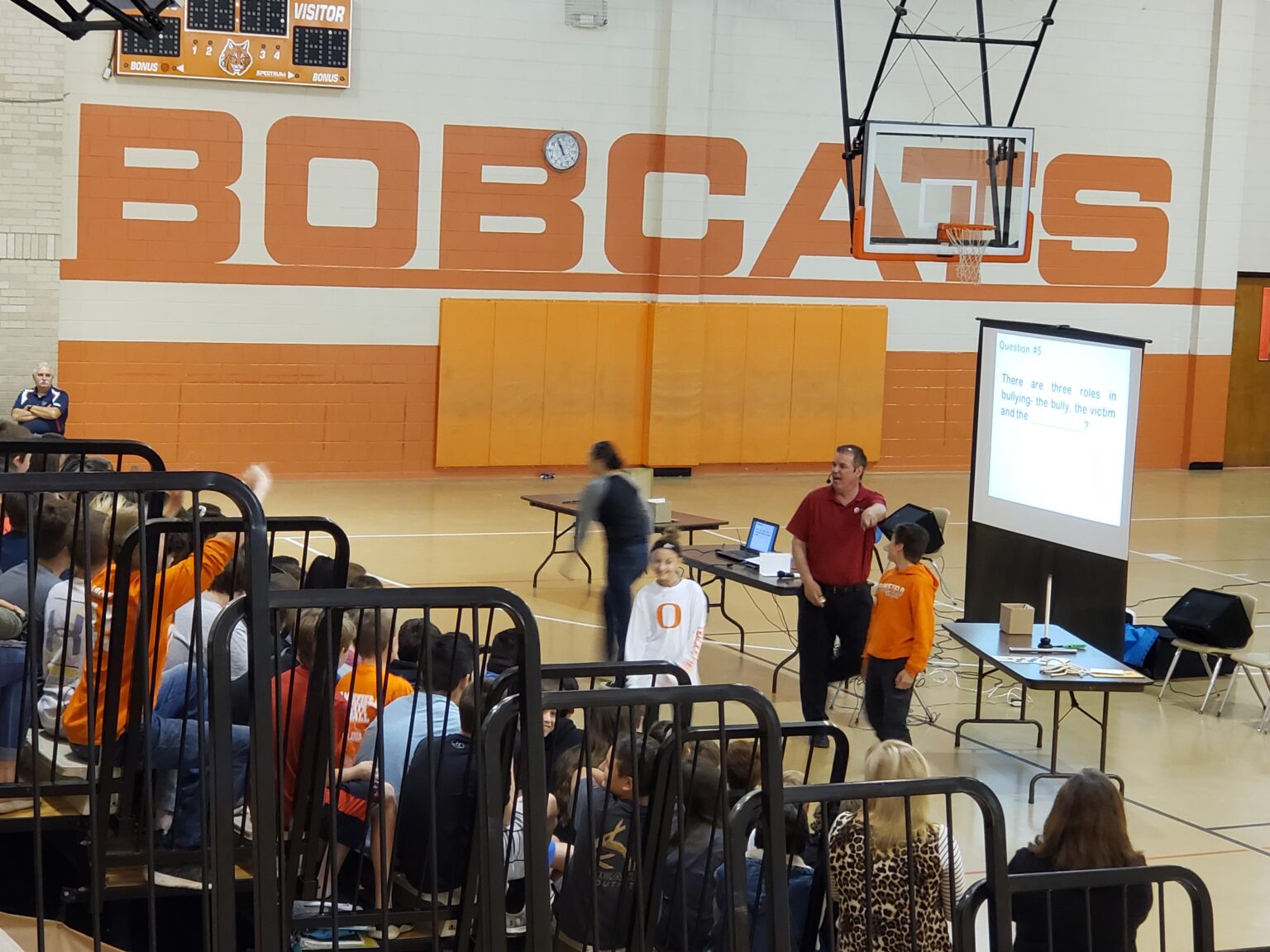
Our anti-bullying program works on the proactive side of bullying by educating students to speak up and why they need to speak up. This education includes:

  • Awareness Building: Helping students recognize all forms of bullying, including subtle verbal and relational aggression
  • Empathy Development: Teaching students to understand and feel the pain that bullying causes
  • Responsibility Framing: Shifting the perspective from “it’s not my problem” to “I have the power to make a difference”
  • Practical Skills: Giving students specific, safe strategies for intervening as bystanders
  • Confidence Building: Helping students overcome fear and find the courage to act
  • Reporting Systems: Establishing clear, trusted pathways for students to report bullying to adults

The Comprehensive Proactive Approach

Once they speak up, then we have the counselor help the bullies and victims to get them off on the right track to being productive citizens in their school and community. This reveals another key difference between zero tolerance and proactive approaches: proactive programs don’t just punish—they rehabilitate and support.

Supporting Victims

Victims of bullying need more than just the cessation of the bullying. They need counseling to address trauma, strategies to rebuild self-esteem, social skills development to help them form healthy relationships, and academic support if bullying has affected their school performance. Simply suspending the bully and leaving the victim to cope alone is insufficient and can leave lasting psychological scars.

Rehabilitating Bullies

Students who bully others are often struggling with their own issues—problems at home, lack of social skills, previous victimization, learning difficulties, or mental health challenges. Effective intervention includes counseling to address underlying issues, teaching empathy and perspective-taking skills, providing alternative strategies for getting needs met, and helping students understand the consequences of their behavior beyond just punishment.

When bullies receive this comprehensive support rather than just suspension, research shows they’re much more likely to change their behavior permanently and become positive members of the school community.

Why Schools Choose Our Program

That is why every time we speak at a school they want us to go to every school on their school board. Schools that experience the difference between reactive punishment and proactive education immediately see the value and want to extend it throughout their entire district.

Educational Excellence

You see, our assemblies are extremely educational but we offer the school a full year of follow-up to keep the message going strong. This is crucial because one-time presentations, while impactful in the moment, have limited long-term effectiveness. Real culture change requires sustained effort, consistent messaging, and ongoing reinforcement.

Our Comprehensive Program Includes:

  • Engaging Student Assemblies: Age-appropriate presentations that capture attention and inspire action
  • Staff Training: Equipping teachers and administrators with tools to recognize, address, and prevent bullying
  • Parent Resources: Providing families with information and strategies to support anti-bullying efforts at home
  • Follow-Up Materials: A full year of classroom activities, discussion prompts, and reinforcement lessons
  • Ongoing Support: Consultation and guidance as schools implement and sustain culture change
  • Measurement Tools: Methods for assessing program impact and identifying areas for continued improvement

Measurable Results

Schools that implement comprehensive, proactive anti-bullying programs consistently report decreased bullying incidents, improved school climate and student relationships, increased student willingness to report bullying, better academic outcomes as students feel safer and more focused, reduced disciplinary referrals and suspensions, and higher satisfaction among students, parents, and staff.

These results stand in stark contrast to the outcomes of zero tolerance policies, which often show no decrease in bullying (just better-hidden bullying) and increased negative outcomes for suspended students.

Making the Shift: From Punishment to Prevention

The evidence is clear: zero tolerance sounds good but doesn’t work. Proactive, education-focused, bystander-empowering programs create real, lasting change. The question for schools is not whether to adopt a proactive approach, but how quickly they can make the transition.

Taking the First Step

If your school is currently relying on zero tolerance or other primarily reactive approaches to bullying, it’s time to reconsider. Start by examining your current bullying data honestly, gathering input from students about school climate, assessing whether current policies are actually reducing bullying or just driving it underground, and considering the research on effective anti-bullying strategies.

Then, make a commitment to implement a comprehensive, proactive program that educates all students, empowers bystanders, supports victims and bullies, and changes school culture fundamentally.

Ready to Transform Your School?

If you need any other information or pricing, please contact us at 1-866-333-4553

Visit our website: Anti-bullying programs by Jim Jordan (Anti-bullying program expert)

© 2025 Reportbullying.com | All Rights Reserved

Empowering Bystanders | Preventing Bullying | Creating Lasting Change